Cape Town / Johannesburg, South Africa
The Foundation's work in South Africa focuses on strengthening the rule of law, liberal democracy, and a social market economy. We support civil society organisations, think tanks, research institutions, and liberal-minded decision-makers in both the economy and society.
In Cape Town, the seat of the parliament, the foundation cooperates with the Democratic Alliance members of national and provincial parliaments, local government councillors, youth movements, and their support structures to strengthen leadership and improve their policy solutions. Through its work, FNF strengthens the rule of law, fosters an open society, and promotes sustainable development in South Africa.
News
-
Germany’s Niklas Wagner on liberalism, youth activism, and South Africa’s lasting impact
What happens when young liberal leaders from two very different parts of the world come together? For Niklas Wagner, a 23-year-old member of the Junge Liberale (JuLis) Federal Executive Board, a recent study tour to South Africa offered exactly that opportunity. Hosted by the FNF, the visit brought Wagner and fellow JuLis into dialogue with DA Youth and DASO activists in Johannesburg. Through workshops, debates, and direct community engagement, they explored shared challenges in democracy, civic participation, and global cooperation.
-
What is it like being queer in South Africa?
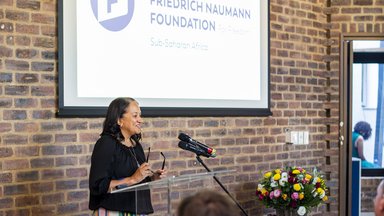
To mark Pride Month, the Friedrich Naumann Foundation in South Africa invited Martin Meyer, MEC for Public Works and Infrastructure in KwaZulu-Natal, to share his thoughts on the state of LGBTQI rights in the country. Meyer acknowledged that while South Africa has made major legal and constitutional advances—such as marriage equality and representation in politics—lived experiences remain unequal.
-
Trump’s Stage, Ramaphosa’s test
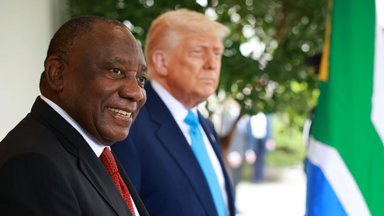
South African President Cyril Ramaphosa met U.S. President Donald Trump at the White House this week to strengthen ties. Instead, the South African delegation faced a staged performance tailored for Trump’s domestic audience. In the lead-up, Trump and his allies reignited false claims of a “white farmer genocide” in South Africa — a narrative disproven by crime data and human rights groups. Still, the myth remains popular among Trump’s conservative base, serving as a convenient but harmful political tool in U.S. discourse.
-
‘South Africa still enjoys world-class Press Freedom’
In celebrating Freedom Month in April and World Press Freedom Day in May, the Friedrich Naumann Foundation in South Africa sat down with one of the country’s renowned journalists, Ferial Haffajee. She is an Assistant Editor at the Daily Maverick, one of the FNF’s long-standing partners. She was previously the first female editor of several mainstream newspapers in the country, played a key role in exposing state capture, and is a defender of freedom, particularly press freedom, while also advancing social justice in the country.
-
A Bold move or the end? The DA, the ANC, and the Value Added Tax (VAT) strains on the Government of National Unity
South Africa’s Government of National Unity faces a key test as ANC–DA tensions grow over a proposed VAT rise. While framed as a tax issue, it reflects deeper coalition strains. The DA, feeling sidelined, warns a VAT hike would hurt the vulnerable and urges better spending and anti-corruption. The clash raises doubts about whether the GNU is a true partnership or ANC-led façade.
-
The deterioration of U.S.-South Africa relations
The expulsion of Ambassador Ebrahim Rasool in March 2025, after remarks on U.S. racial politics, marked a low in relations. U.S. Secretary of State Marco Rubio called Rasool a “race-baiting politician,” highlighting tensions. The conflict reflects deeper ideological and policy differences, particularly on racial redress. U.S. officials have misrepresented South Africa’s economic and land reforms as discriminatory. This weaponisation of race has strained ties, underscoring the need to move beyond racial narratives in foreign relations, writes Kwezi Sogoni.
-
Young voices in parliament
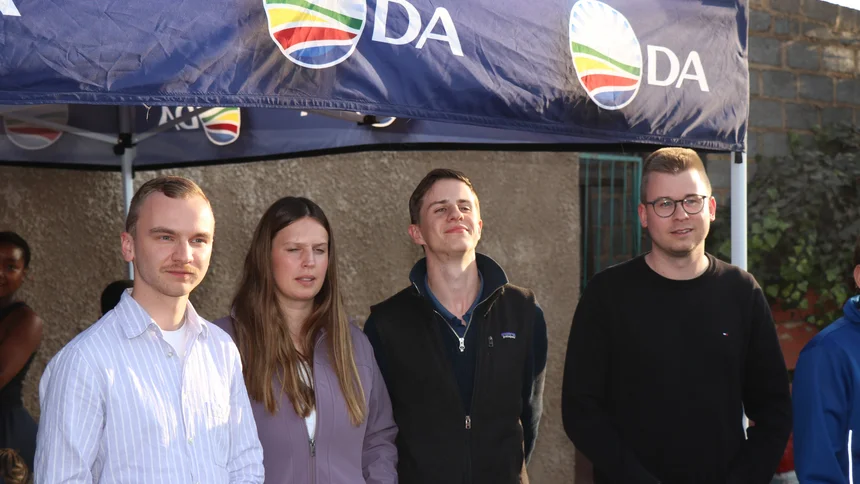
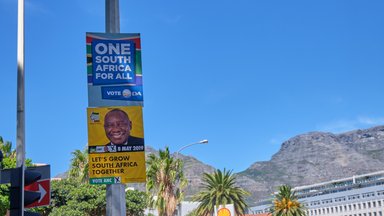
South Africa is grappling with a severe unemployment crisis, particularly among young people, with over 40% of youth unable to find jobs. In response, the Democratic Alliance (DA) has implemented policies aimed at job creation, particularly in the Western Cape where it governs, and more recently through the Government of National Unity (GNU). These efforts reflect the DA’s commitment to addressing youth unemployment through economic growth and opportunity. William Sezoe had the chance to sit down with three dynamic young members of the National Parliament to explore their vision, strategies, and plans to champion the needs and aspirations of South Africa’s youth.

-
From Cape Town to Berlin — Innovators called to break barriers
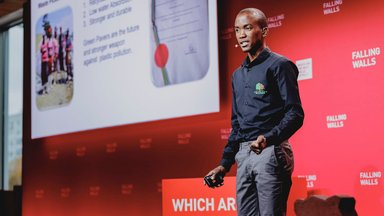
Sekelo Shude’s plastic-to-bricks project, born in Durban and pitched in Berlin, showed the power of grassroots innovation. Now, Falling Walls Lab Cape Town 2025 is calling for South Africa’s next changemakers. If you have an idea that breaks barriers—scientific, social, or environmental—apply now. Finalists will pitch in Cape Town, with a chance to compete globally in Berlin. Apply by 18 July at falling-walls.com.
-
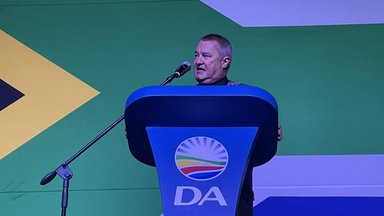
Principle before Politics for KZN MEC
When Francois Rodgers assumed his role as KwaZulu-Natal’s new MEC for Finance, he faced numerous challenges, from addressing wasteful expenditure to combating entrenched corruption. Determined to bring change to a province long troubled by mismanagement, Rodgers transitioned from years on the opposition benches to a key government position. Known for his humility and focus, he prioritises transparency and fiscal discipline in governance, playing a pivotal role in the unprecedented coalition government formed after the May 2024 elections. -
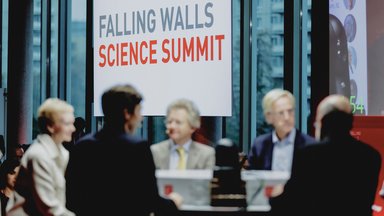
Breaking barriers at the Falling Walls science summit in Berlin
This year marks the 35th anniversary of the fall of the Berlin Wall in 1989, a pivotal moment in history that not only unified Germany but also marked the beginning of the end of the Cold War. In 2009, Falling Walls convened its first conference, establishing a global platform to foster collaboration among the world’s leading innovators in science and society. Since then, the summit has grown exponentially, creating a vast network of labs that support groundbreaking talent across various fields.
-
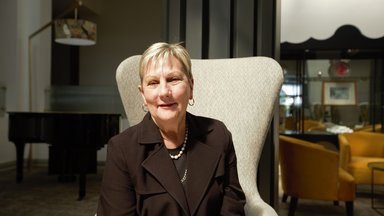
Crime on the Cape Flats: WC minister has a plan
Crime in the Western Cape Province, especially on the Cape Flats in Cape Town, has become an increasing concern for community members, including politicians. Following the May 2024 election, the Democratic Alliance’s (DA) Anroux Marais was appointed Provincial Minister for Police Oversight and Community Safety in the province. She previously served as WC Minister for Arts, Sport, and Culture. Leaving her previous ministry was not easy, but she is ready for the new challenge, Marais says.
-
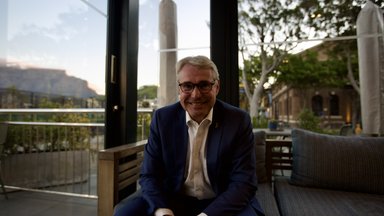
"You must understand your political competitor"
With South Africa being in a Government of National Unity (GNU), or essentially a coalition government, German Member of Parliament Carl-Julius Cronenberg from the Free Democratic Party (FDP) believes that much can be learned from Germany.
Cronenberg visited South Africa for the first time last week, where he engaged with various stakeholders, including the German Embassy and Democratic Alliance (DA) Members of the South African Parliament. He spent a few days in Johannesburg, where coalitions are unstable, and a few days in the best-run metropolitan city in the country, Cape Town. -
“I want education to get back to basics”
Politics is a bumpy and sometimes uncertain road. The story of Ciska Jordaan is a testament to this. Following the May 2024 elections Jordaan was elected as a Member of Parliament and now serves as a member of the Basic Education Portfolio Committee.
However, her journey into politics began much earlier. During her days at the University of Pretoria, she noted how active student politics was, but at the time, she had no interest. -
“I would choose politics again”
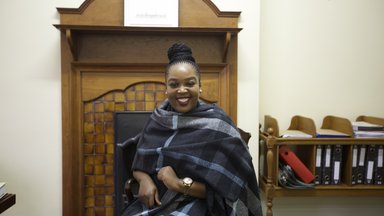
Since a young age, Karabo Khakhau has always been a voice for those who cannot speak up for themselves. Today, she is a member of Parliament and the spokesperson of the Democratic Alliance (DA). Being a woman in the political arena is no easy job, but if she could choose again, she would still choose politics. Khakhau’s journey in politics began during her university days at the University of Cape Town under the Democratic Alliance Students Organization (DASO). However, she says her mother always reminds her that she has been an activist since childhood.
-
"I want people to be heard"
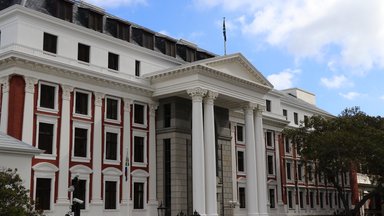
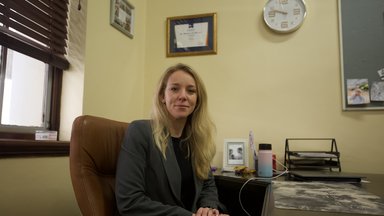
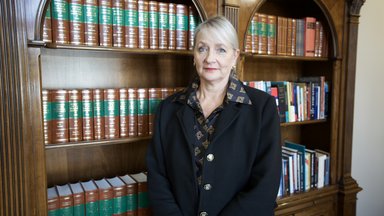
"I want Parliament to be a place where people can voice their concerns, a place where they can be heard," says Dr Annelie Lotriet, Parliament's newly elected Deputy Speaker. We meet in her office in Africa House, within the Parliamentary buildings in Cape Town. It's clear she's still settling into the space, but her work to make Parliament a voice for the people has already begun. Lotriet’s political journey began while she was a lecturer, balancing her career with being a mother and wife. "It's no easy task. You need to be a multitasker,” she says.
Social Media
-
32
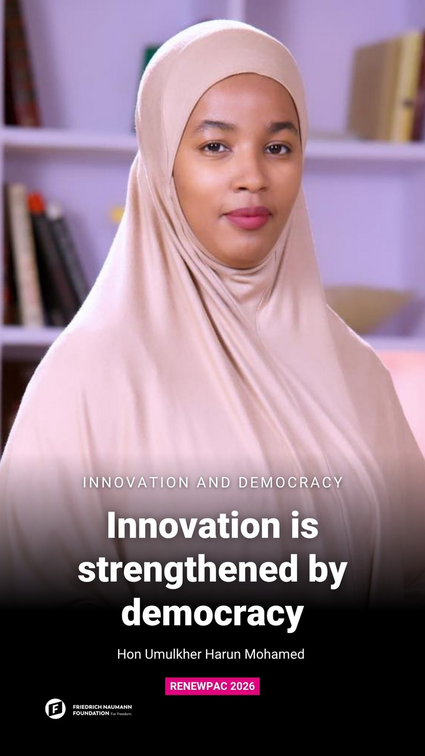
Hon. Umulkheir Harun Mohamed MP, recently shared her insights at the Renewpac summit in Morocco on why Africa isn’t just following the tech conversation, it’s leading it. From the pioneering success of M-PESA to the digital mobilization of the Gen Z protests in Kenya, Umulkher highlights a powerful truth: Innovation thrives where democracy is active. Key Highlights: Tech-Driven Growth: Africa’s young demographic is the engine behind our growing digital economies. Political Ownership: The digital space is a tool for young people to claim their seats in political parties and decision-making rooms. Active Leadership: Africa is no longer "waiting for things to happen", we are the innovators of our own future. #YouthInPolitics #AfricanTech #Kenya #Renewpac2026 #DigitalDemocracy #HonUmulkherHarun #WomenInLeadership
-
36
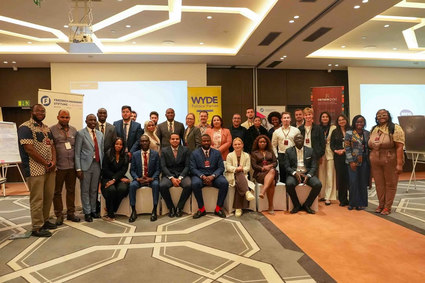
Empowering the next generation of liberal leadership in Rabat! On the sidelines of the Renew PAC Summit, the Friedrich Naumann Foundation, WYDE and ENoP hosted the Liberal Youth Forum: "Power of Action: Liberal Youths Meeting the Challenges of Our Time." Key highlights: Intercontinental Dialogue: 30 young leaders from Africa and Europe (including a strong Junge Liberale JuLis delegation) exchanging strategies. Strategic Focus: Addressing the rise of populism, migration, and digital transformation. The Mission: Bridging the gap between youth political engagement and actual leadership visibility. Liberal partnerships are essential for resilience in a multipolar world. #RenewPAC2026 #InternationalRelations #LiberalPolitics #YouthLeadership #AfricaEuropeRelations #DemocraticGovernance
-
3
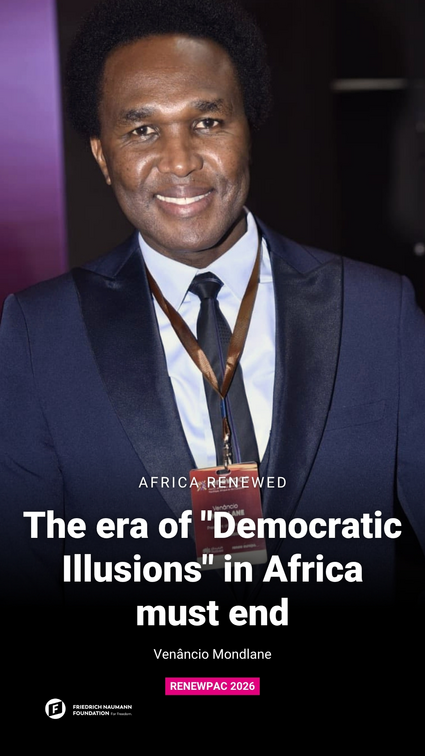
The era of "Democratic Illusions" in Africa must end. 🌍 Speaking at the #Renewpac summit in Morocco, invited by the Friedrich Naumann Foundation, Venâncio Mondlane shared a powerful message on the future of the continent. From the necessity of real, non-partisan institutions to the power of the people, the message is clear: Africa is ready for a new chapter. Key Takeaways: ✅ Moving from "sham" democracies to genuine ones. ✅ Depoliticising public institutions for a republican approach. ✅ Building African interconnectivity through infrastructure and trade. The future of a Great Africa starts with reform. #AfricaRenewed #VenancioMondlane #Democracy #Renewpac2026 #Mozambique #AfricanLeadership